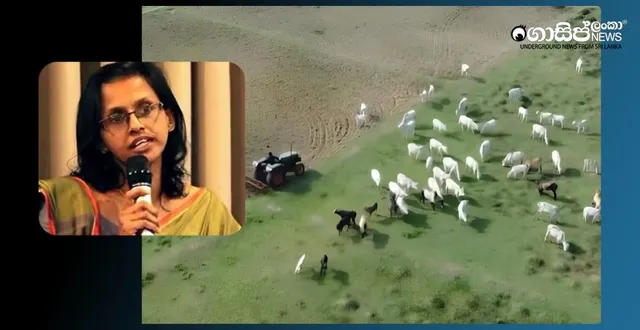
Tirukkovil dairy farmers, who prepared to remove their cattle from the Vattamadu grassland and take them back to their villages, have been placed in severe difficulty. Around a hundred dairy farmers gathered near the road to bring the cattle out, but it is reported that a large number of the animals fled back into the forest due to heavy downpours.
As it took time to trace the cattle that fled into the jungle, the process of bringing them out was halted, and police were also summoned to the scene. The order for everyone to vacate the Vattamadu land was issued during a discussion held at the Ampara District Secretariat on the 19th, chaired by Devani Jayathilake, Conservator of Forests for the Eastern and North Central Provinces.
Severe Impact on the Dairy Industry
According to data from the Department of Animal Production and Health, the Eastern Province accounts for the highest cattle population in the country. That figure stands at 568,123, which represents 36.6 percent of the island's total dairy cattle population. In such a context, losing the Vattamadu pasture has directly impacted the traditional livelihoods of dairy farmers.
History of the Vattamadu Land Dispute
In 1974, out of 4,700 acres surveyed and demarcated by then Ampara Government Agent Percy Abeysundara, 4,000 acres were gazetted as a pasture reserve through Parliament in 1976. However, during the war, the land was barred to Tamil dairy farmers due to security reasons, during which other parties engaged in illegal paddy cultivation on the site. It is alleged that permits were even issued to children aged between 11 and 17 at the time.
In 2010, this land was incorporated into the Bakmitiyawa Kimbirigolla Reserve. Although farmers moved the Court of Appeal in 2011 seeking the eviction of unauthorised cultivators, the petition was dismissed on March 27 on grounds that the relevant gazette notification had been issued under Emergency Regulations. Consequently, authorities are now faced with finding solutions to the crises that will arise once tens of thousands of cattle are brought back to the villages.