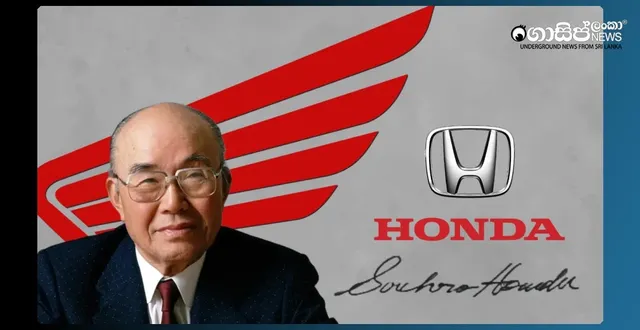
Soichiro Honda was born on 17 November 1906 in the village of Komyo, near Hamamatsu in Shizuoka Prefecture, Japan. His father, Gihei, was a blacksmith who repaired bicycles, while his mother, Mika, was a weaver. Drawn more to the smell of motor oil in the garage than to schoolbooks, his passion for machinery was ignited at an early age when he saw the first motor car pass through his village.
Leaving for Tokyo at the age of 15, Soichiro worked as an apprentice at the Art Shokai garage. In 1928, he set up his own repair branch and also took part in motor racing, until an accident in 1936 damaged his left eye and brought his racing days to an end. Later, he founded Tokai Seiki to supply piston rings to Toyota, overcoming initial manufacturing flaws and expanding the enterprise to over 2,000 employees.
Key Points
- Born in 1906 as the son of a blacksmith, Soichiro had a deep passion for machinery from childhood
- War and earthquakes destroyed his factories, leaving him with nothing
- In 1946, he launched Honda's journey from a 16-square-metre wooden shed by fitting engines to bicycles
- The Super Cub motorcycle introduced in 1958 went on to sell over 100 million units
War and earthquakes turn everything to ashes
In 1944, a US B-29 bombing raid destroyed his Yamashita plant, and in January 1945, the Mikawa earthquake levelled the Iwata factory. Having lost virtually everything he had built, he was forced to sell the salvageable machinery to Toyota for 450,000 yen.
However, observing the severe transport difficulties of the post-war era, Soichiro established the Honda Technical Research Institute in October 1946 in a 16-square-metre wooden shed in Hamamatsu. He bought around 500 surplus military generator engines and fitted them to bicycles, creating the 'Bata-Bata' motorised cycle, which became immensely popular among the public.
“Success represents the 1% of your work which results from the 99% that is called failure.”
Soichiro Honda
The birth of Honda and global conquest
On 24 September 1948, Honda Motor Co., Ltd. was officially established with a capital of one million yen. In 1949, the company introduced its Dream D-Type 98cc motorcycle, and in the same year, he met Takeo Fujisawa. While Soichiro handled the technical aspects, Fujisawa directed finance and marketing.
The Super Cub motorcycle introduced in 1958 made history, selling more than 100 million units. The company opened a subsidiary in the United States in 1959 and ventured into automobile production in 1963. Soichiro Honda retired from the presidency in 1973 and passed away in Tokyo on 5 August 1991 at the age of 84.