The provisional data report on the mid-year fiscal position issued by the Ministry of Finance has revealed that the financial performance of the country's key state institutions stood at two extremes during the first six months of 2026. While 40 entities, including state banks, reported substantial profits, another 12 institutions remain in a severe financial crisis.
The three main state banks led the way with the highest profits. Bank of Ceylon recorded a pre-tax profit of Rs. 62.6 billion, while People's Bank posted Rs. 32.6 billion and National Savings Bank earned Rs. 22.5 billion. The Employees' Trust Fund Board managed to secure a profit of Rs. 36.5 billion, and the Sri Lanka Ports Authority achieved a profit of Rs. 34.5 billion.
Key Highlights
- Bank of Ceylon leads with a profit of Rs. 62.6 billion
- SriLankan Airlines incurs a Rs. 35.5 billion loss in six months
- Government prepares to introduce a new bill for state-owned enterprises
Subsidised profits and loss-making entities
Although the Ceylon Petroleum Corporation posted a pre-tax profit of Rs. 29.1 billion, it is reported that this was bolstered by a Rs. 41 billion government subsidy. Airport and Aviation Services (Sri Lanka) Limited reported a profit of Rs. 24.8 billion, while the National Water Supply and Drainage Board earned Rs. 16.1 billion and the National Insurance Trust Fund recorded Rs. 12.8 billion. The Development Lotteries Board and the National Lotteries Board earned Rs. 5.34 billion each. In addition, the Regional Development Bank recorded Rs. 3.5 billion, Sri Lanka Insurance Corporation Rs. 2.6 billion, the Ceylon Electricity Board and the State Pharmaceuticals Manufacturing Corporation Rs. 1.4 billion each, and Milco (Pvt) Ltd posted a profit of Rs. 999 million.
On the other hand, SriLankan Airlines Limited faces a deepening crisis after incurring a staggering loss of Rs. 35.5 billion. The Sri Lanka Transport Board, which turned a profit in 2025, recorded a loss of Rs. 471 million, while the State Printing Corporation and the Independent Television Network recorded losses of Rs. 185 million and Rs. 37 million respectively. Lanka Sugar Company (Pvt) Ltd recorded a loss of Rs. 1.5 billion, Sri Lanka Rupavahini Corporation Rs. 166 million, Sri Lanka Broadcasting Corporation Rs. 68 million, State Development and Construction Corporation Rs. 193 million, State Engineering Corporation Rs. 182 million, and Lanka Sathosa Limited recorded a loss of Rs. 89 million.
“Today, there are 52,725 entities identified as state enterprises. However, only a few of them operate as actual commercial enterprises. Other institutions carry out different mandates. In this regard, it must be stated clearly that the government has no desire to run businesses. The government only wishes to act as a facilitator.” - Dr. Anil Jayantha Fernando
New bill for the state enterprise system
Meanwhile, reports indicate that the government is preparing to make major changes to the state-owned enterprise framework. An upcoming bill is expected to facilitate the restructuring, diversification, or merger of certain enterprises, with plans to run some entities in partnership with the private sector.
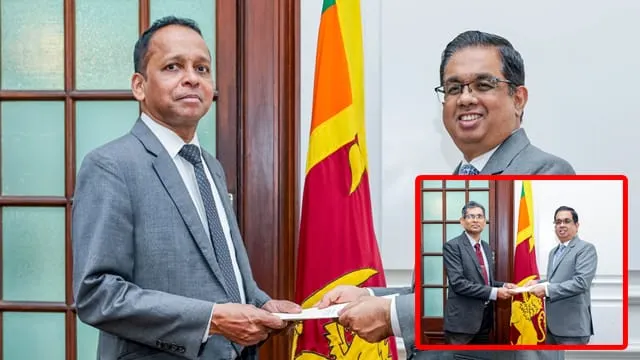
The government aims to bring all these enterprises under a single common legal framework, and the process of transforming them into incorporated companies capable of making independent decisions based on market dynamics will take some time, Deputy Minister of Finance and Planning Dr. Anil Jayantha Fernando said.
What lies ahead?
A new bill on state-owned enterprises is due to be presented in the near future, along with the relevant legislative amendments.