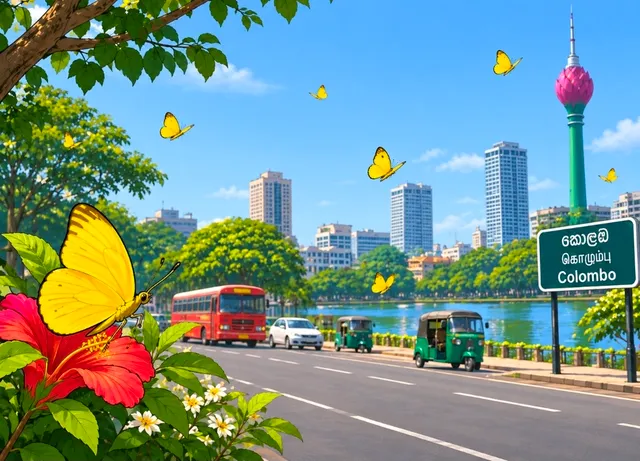
Social media has been flooded with photos and videos of massive butterfly swarms moving together in areas such as Colombo, Galle and Ratnapura. Many wondered what was behind this sudden surge.
According to Fact Crescendo Sri Lanka, this is simply a regular seasonal butterfly migration. It happens during two periods every year, with the primary wave occurring between October and December and another smaller run between March and April.
Why are they on the move?
Monsoon transition rains cause host plants to flourish, offering plenty of food and breeding spaces, particularly across the dry zone. As numbers surge, butterflies set off across regions to search for fresh egg-laying spots and to avoid competing for food.
A former president of the Butterfly Conservation Society of Sri Lanka noted that growing populations disperse nationwide depending on wind and plant availability. She noted Lemon Emigrant and Mottled Emigrant butterflies flying east to west across Borella in Colombo.
A 2024 study in Taprobanica, featuring researchers including Professor Kapila Dissanayake from Sabaragamuwa University, showed a major flight route stretching from Kumana National Park to Wilpattu. Butterflies cover around 280 kilometres in three to four days, with migrating Albatross species cruising at roughly 11 kilometres per hour.
Are they going to Sri Pada or warning of disaster?
The migration often brings up traditional beliefs about swarms heading straight for Sri Pada, also called Butterfly Mountain. Experts say butterflies sometimes gather at high points to mate, an act known as hill-topping, but migration data proves many head northwest instead.
Online speculation also suggested the flight might signal an approaching cyclone or disaster. Experts dismissed this, noting there is no scientific proof linking mass butterfly flights to disaster warnings. They confirmed the event is just a natural ecological cycle.