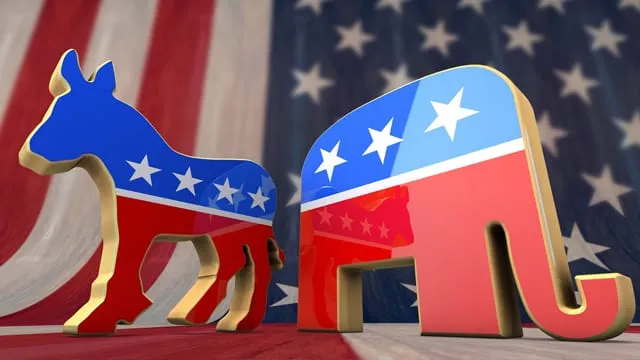
Following their election victory, Democrats have gained control of both Houses of Congress. Foreign reports indicate that they will face the real challenges of this situation coming January.
They face numerous election pledges, including eradicating corruption, reducing healthcare, food and fuel prices, as well as ending the war in Iran. However, despite the shift of power in Washington, Republican President Donald Trump retaining his executive powers will pose a major obstacle for them.
Key Points
- The Democratic Party is set to take control of both Houses of Congress in January.
- Eradicating corruption, cutting healthcare, food and fuel prices, and ending the Iranian war are among their main pledges.
- They will have the ability to block cabinet and judicial appointments made by the President, as well as initiate impeachment proceedings.
- Enacting new laws will be difficult, as President Trump possesses the power to veto bills passed by Congress.
What the Democratic side can do
The Senate holds full power to confirm or reject cabinet and judicial appointments made by the President. For instance, in the event of a vacancy in the Supreme Court, the Senate's power can be used to block nominees or press for the appointment of a moderate figure.
Similarly, the House of Representatives holds the power to impeach the President. Articles of impeachment can be passed with a simple majority of 50% + 1, and Democrats previously managed to impeach Trump twice during his first term in office.
“Today marks the beginning of an American turnaround.” - Hakeem Jeffries
Major issues they will face
In the second stage of an impeachment, a two-thirds majority, or 67 votes, in the Senate is required to convict the President and remove him from office. It is noted that achieving this target under current conditions is difficult, and whether it is advisable to pursue such a move remains under discussion within the party.
Even if legislation is passed through both Houses, President Trump has the authority to veto laws he does not approve. Overriding the President's veto requires a supermajority in both Houses, and political analysts point out that it will be difficult for the Democratic Party to reach that threshold on its own.
Read also:
- Robed monk with cobra cane arrives in Colombo and lashes out at President
- Mahara Pradeshiya Sabha Chairman Athula Kaluarachchi resigns
- Gotabaya requests permission to travel to Singapore for medical treatment: Easter case decision on 25th