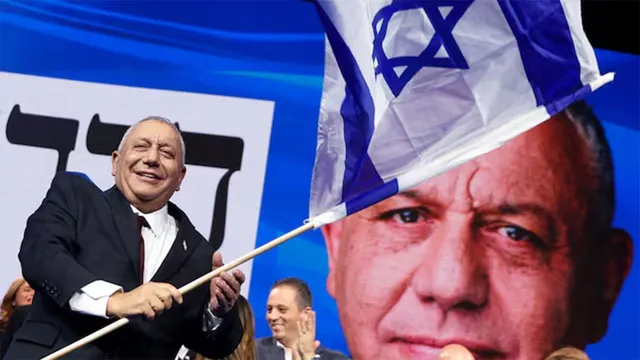
Major political drama in Israel! President Isaac Herzog has officially invited former military chief Gadi Eisenkot to take up the challenge of forming the next government.
The move comes after the October 27 election ended in a deadlock. While Netanyahu's Likud took 27 seats and his religious-nationalist bloc secured 53 seats in the 120-seat Knesset, he fell well short of the 61-seat majority needed.
Eisenkot's Yashar party bagged 21 seats, with his wider four-party coalition reaching 48 seats. Even though Eisenkot refused to join hands with Arab parties, Arab leaders still endorsed him to block Netanyahu, handing him the most recommendations.
Tough road ahead
Putting together a ruling coalition will not be easy at all. Eisenkot has 28 days to build a government, and he could get an extra 14-day extension if needed.
His choices include running a minority government relying on Arab votes, teaming up with ultra-Orthodox groups, or forging a unity deal with Netanyahu. However, analysts believe all three options are quite unlikely to happen.
If Eisenkot cannot pull it off, another candidate will get a turn. Parliament can also step in, but if nobody manages to build a majority within roughly 100 days, Israel will have to head back to the polls.
“Now is the time to form a national emergency government. I will do everything I can to ensure we are worthy.”Gadi Eisenkot
Who is Gadi Eisenkot?
The 66-year-old son of Moroccan immigrants entered political life in 2022. If he becomes prime minister, he would be Israel's first leader from the Mizrahi community.
Eisenkot previously joined Netanyahu's wartime cabinet after the October 7, 2023 attack by Hamas, but later walked away to the opposition. He has strongly slammed Netanyahu's handling of the Gaza campaign and vowed never to govern alongside him.
He has also spoken out against settler violence directed at Palestinians and remains firmly opposed to Netanyahu's far-right allies, Itamar Ben-Gvir and Bezalel Smotrich.
What happens next
Eisenkot has 28 days to attempt to form a government, with a possible 14-day extension. If he fails, other candidates or parliament can try, but if no one succeeds within around 100 days, another election will be held.