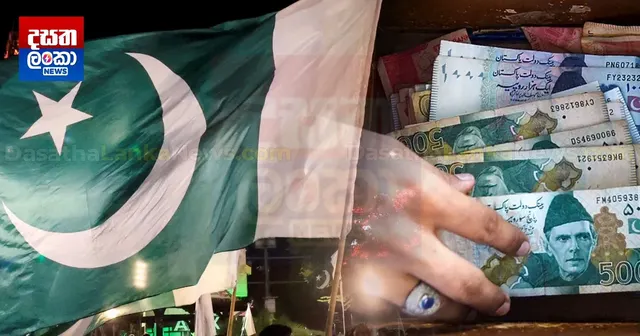
According to the World Bank's 2026 International Debt Report, Pakistan's foreign debt has surged rapidly over the past decade. It reports that external debt, which stood at US$ 68.7 billion in 2015, increased to US$ 135.1 billion by the end of 2025.
At the end of 2024, the country's external debt was recorded at US$ 129.9 billion. Accordingly, this reflects an increase of approximately 4 percent compared to the previous year.
Key Points
- Debt stock of US$ 68.7 billion in 2015 rises to US$ 135.1 billion by the end of 2025.
- US$ 22.4 billion owed to China, the largest single bilateral creditor.
- External debt has risen to 34 percent of the country's Gross National Income.
Breakdown of borrowing and major creditors
Of this total debt, US$ 107.08 billion consists of public and publicly guaranteed debt, while non-guaranteed private sector debt stands at US$ 17.58 billion. Short-term external debt was recorded at a further US$ 10.45 billion.
Of the loans obtained by the government, US$ 56.83 billion was secured from multilateral financial institutions, while US$ 42.43 billion was borrowed from bilateral creditors. The report notes that Pakistan owes around US$ 22.4 billion to China, its largest single bilateral creditor, alongside US$ 19.2 billion to the World Bank and US$ 16.83 billion to the Asian Development Bank.
Regional situation
In 2025, Pakistan's external debt reached 34 percent of its Gross National Income. Meanwhile, the external debt-to-GNI ratio across the region comprising the Middle East, North Africa, Afghanistan, and Pakistan increased from 26.7 percent to 29.4 percent.
The report also highlights that this region saw the largest one-year increase in external debt ratios among all of the World Bank's regional classifications.